Research
Extreme climate events and pesticides are impacting the bumblebee life cycle at critical stages
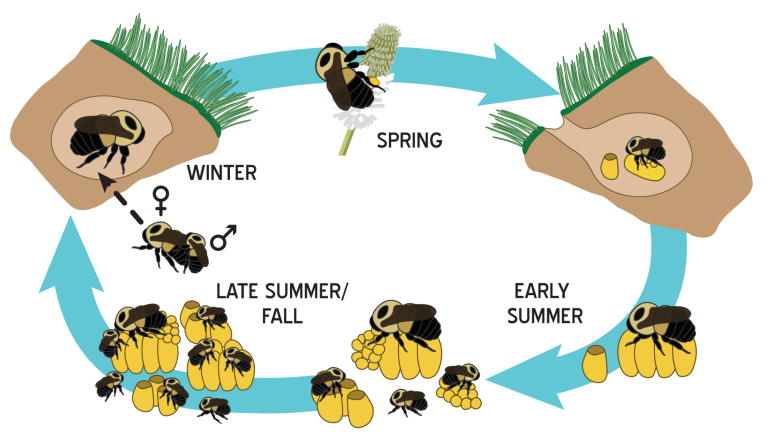
Rising global temperatures are making extreme climate events (ECEs) like heatwaves, droughts and cold snaps more common, while pesticides remain widely used in the landscapes where bumblebees forage. Bumblebee colonies follow an annual cycle, from a single queen founding a nest in spring to the production of new queens in late summer, and each stage builds on the last. When these stressors hit at a vulnerable point, the effects can ripple through the rest of the colony’s life. My work investigates how ECEs and pesticides, alone and combined, impact bumblebees at these critical stages.
What are spring time cold snaps and how do they impact bumblebees?
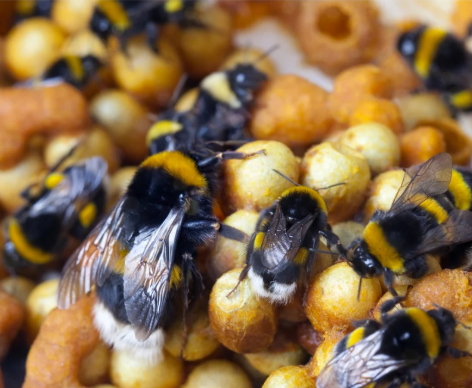
Cold snaps occur when a period of unusually warm weather is followed by a sudden drop in temperature, most often in spring, as seen in the UK in 2021 (click here for details). Bumblebees are temperature-dependent, so their life cycle is closely tied to the seasons. Early in the colony cycle, just after the queen has founded her nest, the workforce is still very small. With few workers to help regulate nest temperature and keep brood warm, the colony has little ability to buffer against a sudden cold spell, making this a particularly vulnerable stage. In the first year of my PhD, I investigated how cold snaps at this stage impact bumblebee colony health and foraging.
Can cold snaps and pesticide use combined make the situation worse?
In the real world, bumblebees rarely face one stressor at a time. Cold snaps often hit in spring, when colonies are small and foraging on crops that may have been treated with pesticides, so the two pressures can overlap at the most vulnerable stage of the life cycle. Pesticides can impair foraging, brood care and thermoregulation, which colonies rely on to cope with cold. In my second-year PhD project, I exposed colonies to a simulated cold snap, acetamiprid, or both, to test whether the combination is worse than either alone.
Can habitat type help buffer the effects of an ECE?
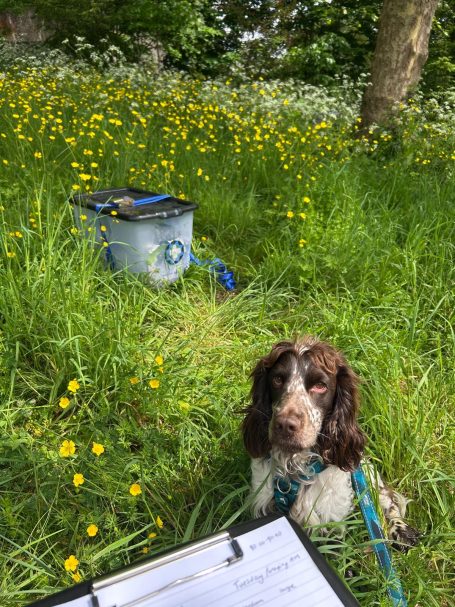
Habitats differ in the food, shelter and microclimate they offer, so some may help bumblebees recover from extreme climate events more quickly than others. In my CASE placement with the Bumblebee Conservation Trust, I am using national BeeWalk monitoring data to investigate whether habitat type affects colony recovery after ECE events.The aim is to identify habitats that buffer bumblebees against extremes and inform pollinator conservation.
Key aspects of my research
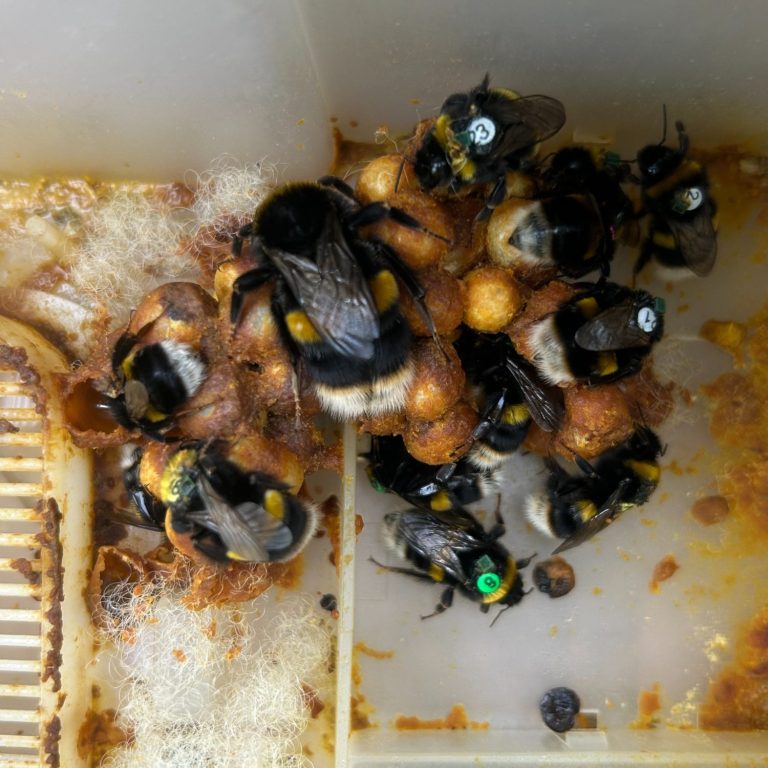
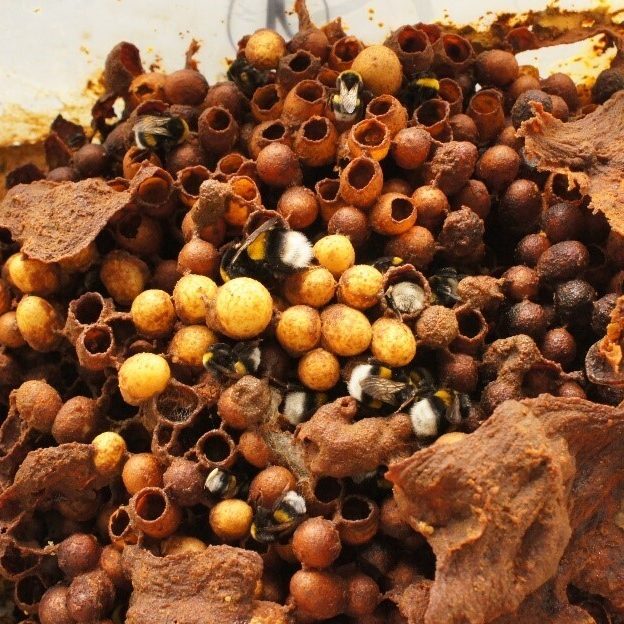
Colony development
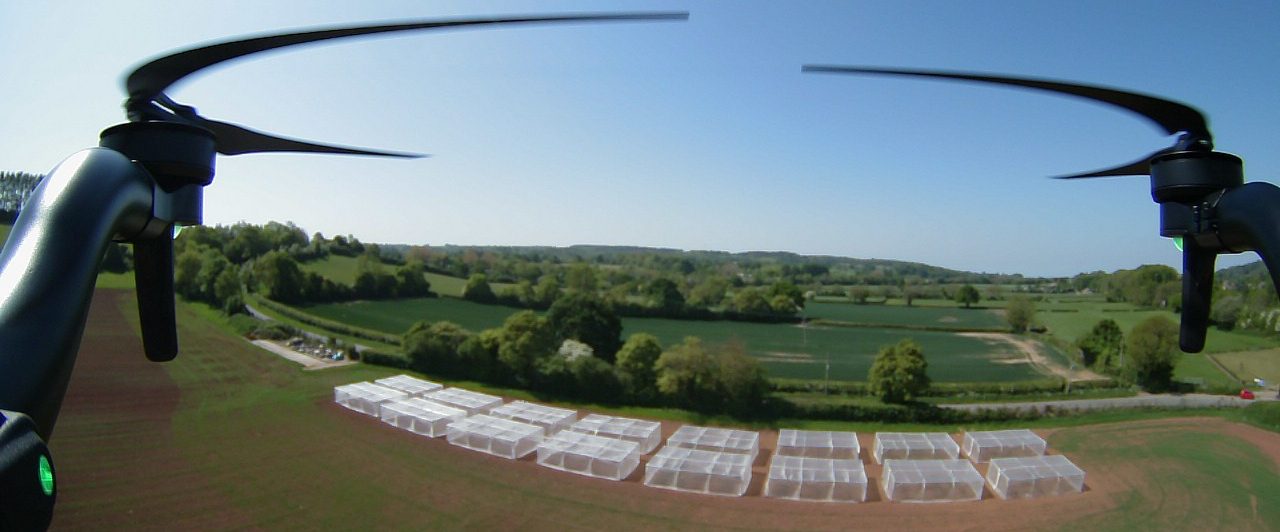
Long term field experiments monitoring worker mortality, queen status, colony size & weight, and reproductive output
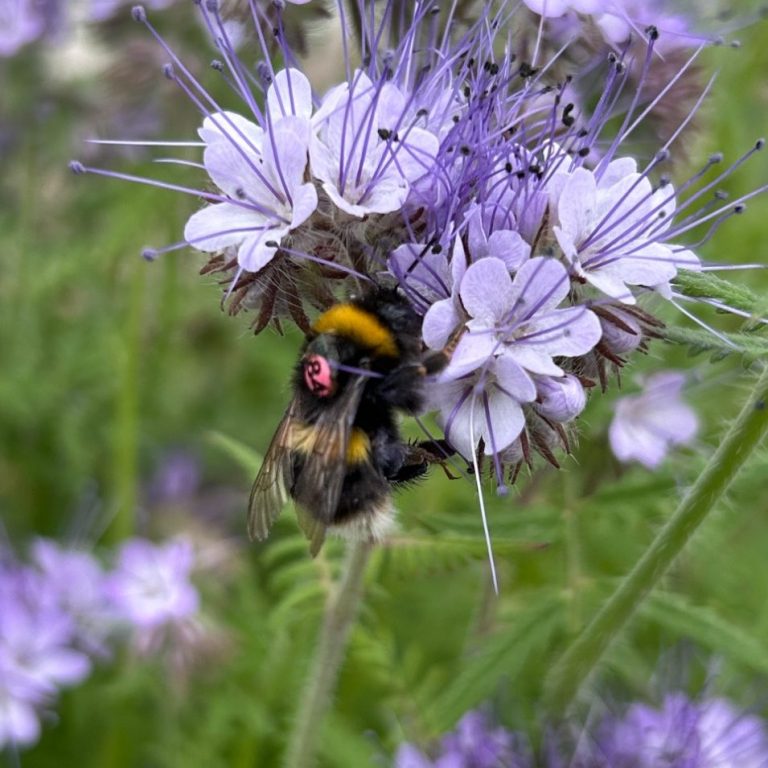
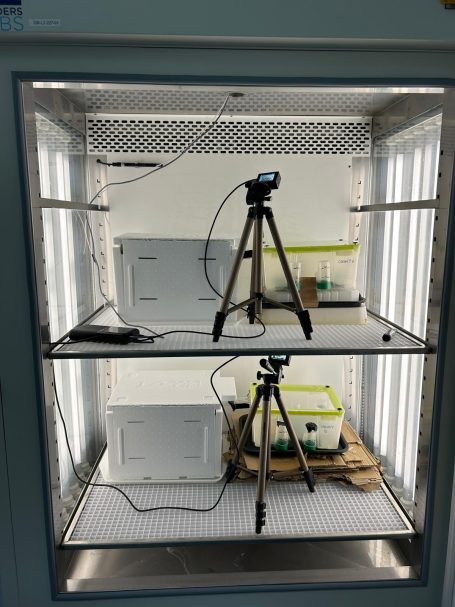
Foraging efficiency
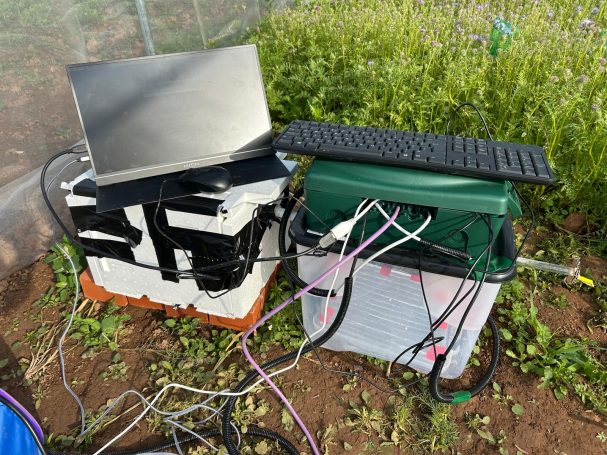
Designed and develpoped automated systems to monitor the foraging load of each worker per foraging trip. Combined with RFID tracking to calculate foraging efficiency
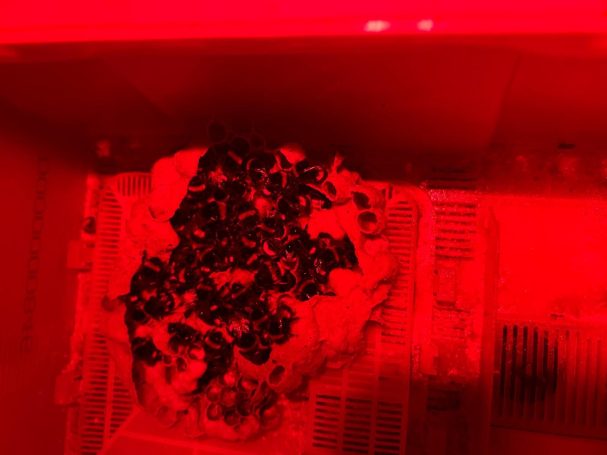
Colony recovery
Focus on colony recovery in the days, weeks and months post exposure to anthropogenic stressors such as extreme climate events and pesticides
In the lab
In the field